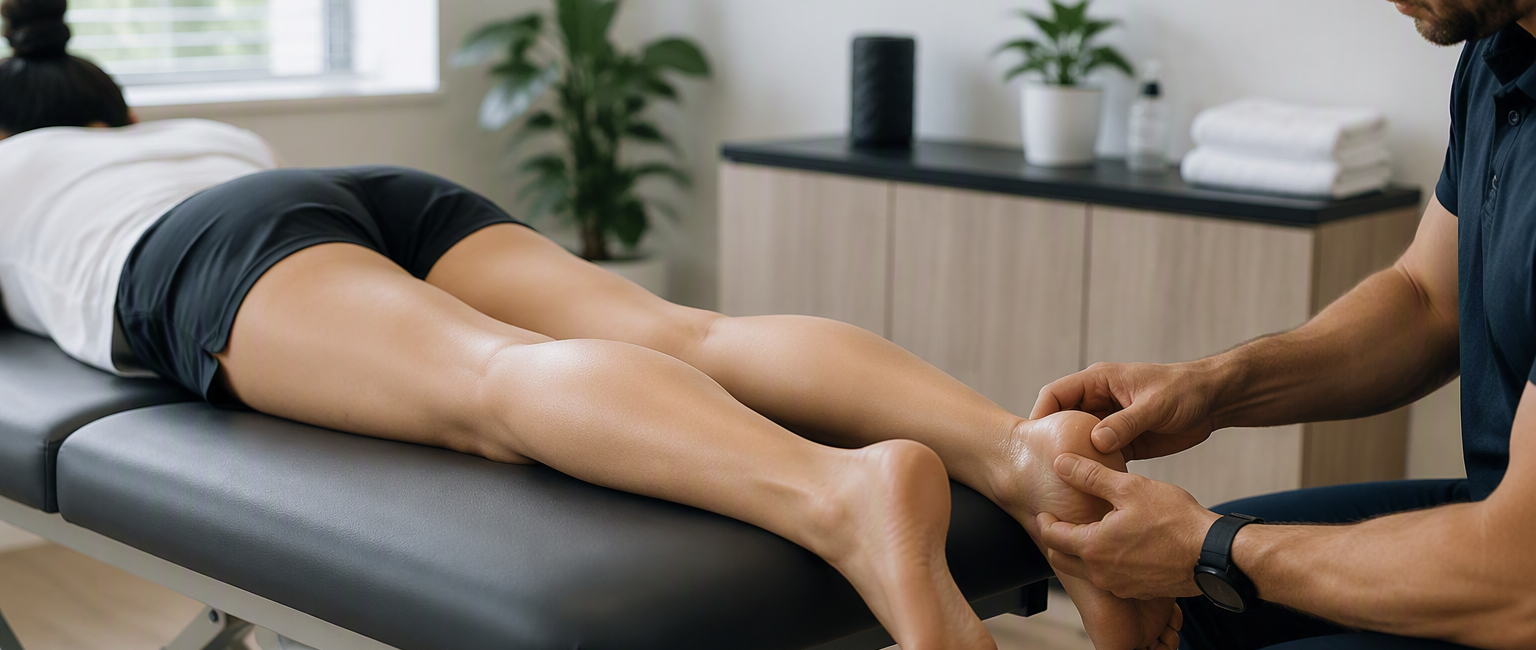
Understanding Achilles Tendon Pain
Achilles tendon pain is one of the most common complaints we see at our clinic in Redhill. Whether you’re a runner clocking up miles, a weekend footballer, or someone who’s simply on their feet all day – that nagging pain at the back of your heel can stop you in your tracks.
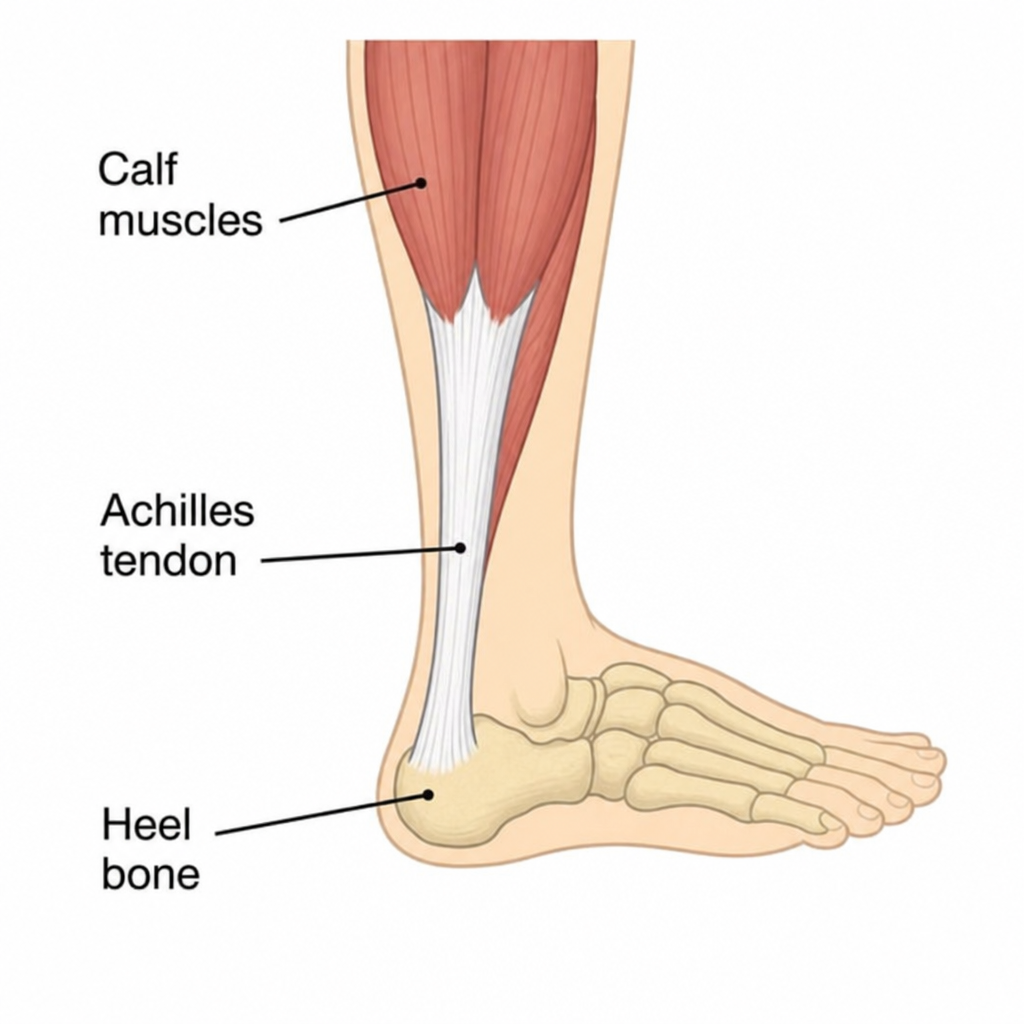
The Achilles tendon is the thickest, strongest tendon in your body. It connects your calf muscles to your heel bone and takes on huge forces every time you walk, run, or jump. However, that strength has limits. When the tendon is overloaded – through too much activity, poor footwear, or tight calves – it starts to break down.
This breakdown shows up in two main ways:
- Achilles tendonitis — inflammation of the tendon, often from a sudden increase in activity
- Achilles tendinopathy — longer-term degeneration where the tendon structure changes over time
The good news? Both respond well to the right stretches and exercises. In most cases, you can manage Achilles tendon pain at home with a structured programme. This guide covers everything you need: the best tendo Achilles stretching techniques, strengthening exercises, when to push through discomfort, and when to see a specialist.
What Causes Achilles Tendon Problems?
Several things can trigger Achilles pain. The most common causes include:
- Sudden increase in activity — jumping from 5k to 10k too quickly, or starting a new sport
- Tight calf muscles — limited flexibility puts extra strain on the tendon
- Poor footwear — worn-out trainers or shoes with no arch support
- Flat feet or high arches — both change how force travels through the tendon
- Age — the tendon becomes less flexible from your mid-30s onwards
- Being overweight — more load on the tendon with every step
You don’t need to be an athlete to get Achilles pain. We regularly treat office workers, parents, and retirees at our Surrey clinic – anyone who’s changed their activity levels or neglected their calf flexibility.
Tendonitis vs Tendinopathy: What’s the Difference?
These terms often get mixed up, so here’s the simple version:
- Tendonitis means inflammation. It’s usually short-term, comes on quickly, and the tendon feels hot or swollen. Rest and ice often help.
- Tendinopathy is a broader term. It means the tendon structure has changed – the collagen fibres have become disorganised. This happens gradually, often without obvious inflammation. It’s the more common diagnosis for pain lasting more than a few weeks.
The treatment approach differs slightly, but both benefit from targeted stretching and progressive loading exercises. The exercises below work for both conditions.
Effective Achilles Tendon Stretches
Regular stretching is one of the best things you can do for Achilles pain. It reduces tension on the tendon, improves blood flow, and helps restore normal flexibility. These achilles tendon stretches are simple, can be done at home, and are often referred to as achilles stretches. Many people ask which achilles heel stretches are safest; the options below are a good starting point.
The key rules for tendo Achilles stretching:
- Hold each stretch for 30 seconds minimum
- Never bounce – use slow, steady pressure
- Stretch both legs, even if only one hurts
- Aim for 3-4 times per day during recovery
- Some mild discomfort is normal; sharp pain means stop
Standing Calf Stretch (Gastrocnemius)
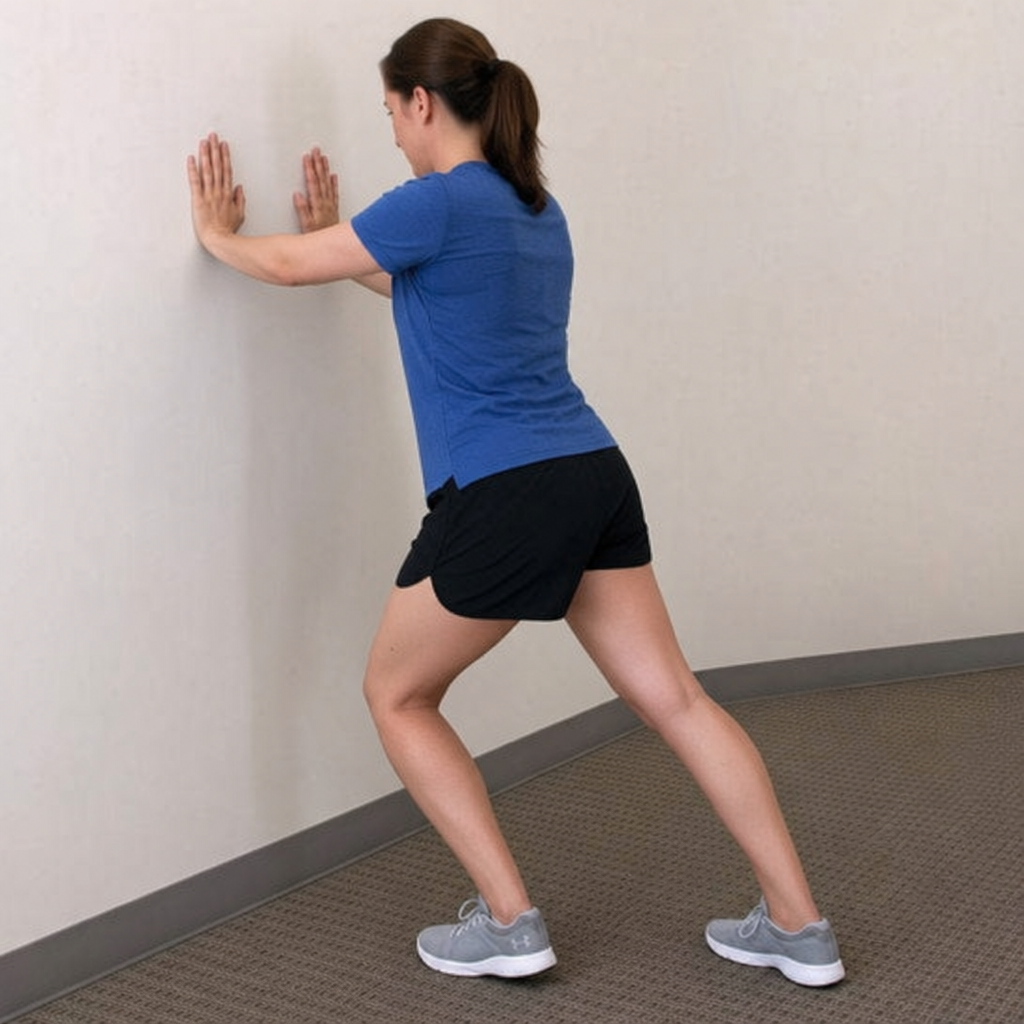
This is the most basic Achilles stretch – and one of the most effective.
- Stand facing a wall, arms out with palms flat against it
- Step one foot back about 60-90 cm
- Keep your back leg straight and heel pressed firmly into the floor
- Lean your hips forward until you feel a stretch in the back of your lower leg
- Hold for 30 seconds, then switch sides
Tip: Keep your back foot pointing straight ahead, not turned out. You’ll feel a deeper stretch along the full length of the tendon.
Repeat 3 times each side. Do this first thing in the morning and again before bed.
Bent-Knee Calf Stretch (Soleus)
This targets the deeper calf muscle – the soleus – which attaches directly into the Achilles tendon.
- Same position as above, but bring your back foot slightly closer
- Bend your back knee while keeping your heel on the ground
- You’ll feel the stretch lower down, closer to the Achilles itself
- Hold for 30 seconds
This stretch is often overlooked but is crucial for achilles tendinopathy treatment. The soleus does most of the work during walking, so tightness here directly loads the tendon.
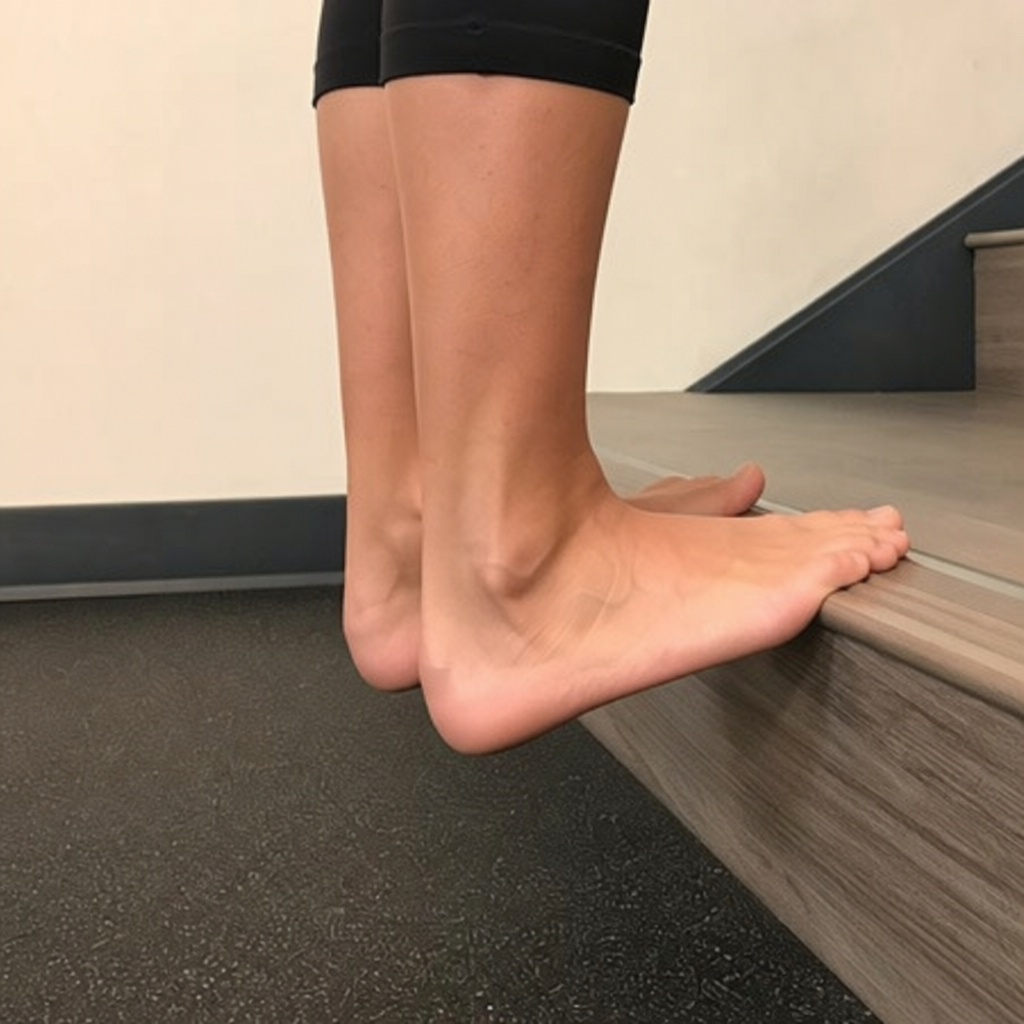
Seated Heel Drop (Step Stretch)
You’ll need a step, stair, or thick book for this one.
- Stand on the edge of a step with just the balls of your feet on it
- Hold a railing or wall for balance
- Slowly lower your heels below the level of the step
- You’ll feel a strong stretch through both Achilles tendons
- Hold for 30 seconds, then push back up
This is slightly more intense than wall stretches. Start gently and increase the range over a few days.
Wall Stretch
A simple variation that works well if you find the standing calf stretch too mild.
- Face a wall and place your toes against the base of it, heel on the floor
- Lean your body forward toward the wall
- You’ll feel the stretch through your arch and up into the Achilles
- Hold for 30 seconds each side
Towel Stretch (Morning Routine)
Achilles tendons are stiffest first thing in the morning. This stretch is gentle enough to do before you even stand up.
- Sit on your bed with legs straight out in front
- Loop a towel around the ball of one foot
- Gently pull the towel toward you, keeping your knee straight
- Hold for 30 seconds, breathing normally
Do this every morning before getting out of bed. It prepares the tendon for the day and reduces that painful first step feeling.
Exercises for Achilles Tendonitis
Stretching alone isn’t enough. Research consistently shows that loading exercises – particularly eccentric exercises – are the gold standard for achilles tendinopathy treatment. These achilles tendinopathy exercises form the core of most structured plans. If you’re looking for quick “Achilles exercises” ideas, start here.
Eccentric means the muscle lengthens under load. Think of it as controlled lowering. This type of movement stimulates the tendon to repair and remodel.
Eccentric Heel Drops (The Alfredson Protocol)
This is the single most evidence-backed exercise for Achilles tendon problems.
On flat ground (beginner):
- Stand on both feet
- Rise up onto your toes (use both legs to push up)
- Shift your weight to the injured leg
- Slowly lower your heel back to the floor over 3-5 seconds
- Use both legs to push up again – only lower on the injured side
Do: 3 sets of 15 repetitions, twice daily.
On a step (intermediate – once flat ground feels easy):
- Stand on the edge of a step, both feet
- Rise up onto your toes
- Shift weight to the injured leg
- Lower your heel below step level over 3-5 seconds
- Push back up with both legs
This increases the range and load on the tendon. Only progress to this once you can do the flat version without increased pain the next day.
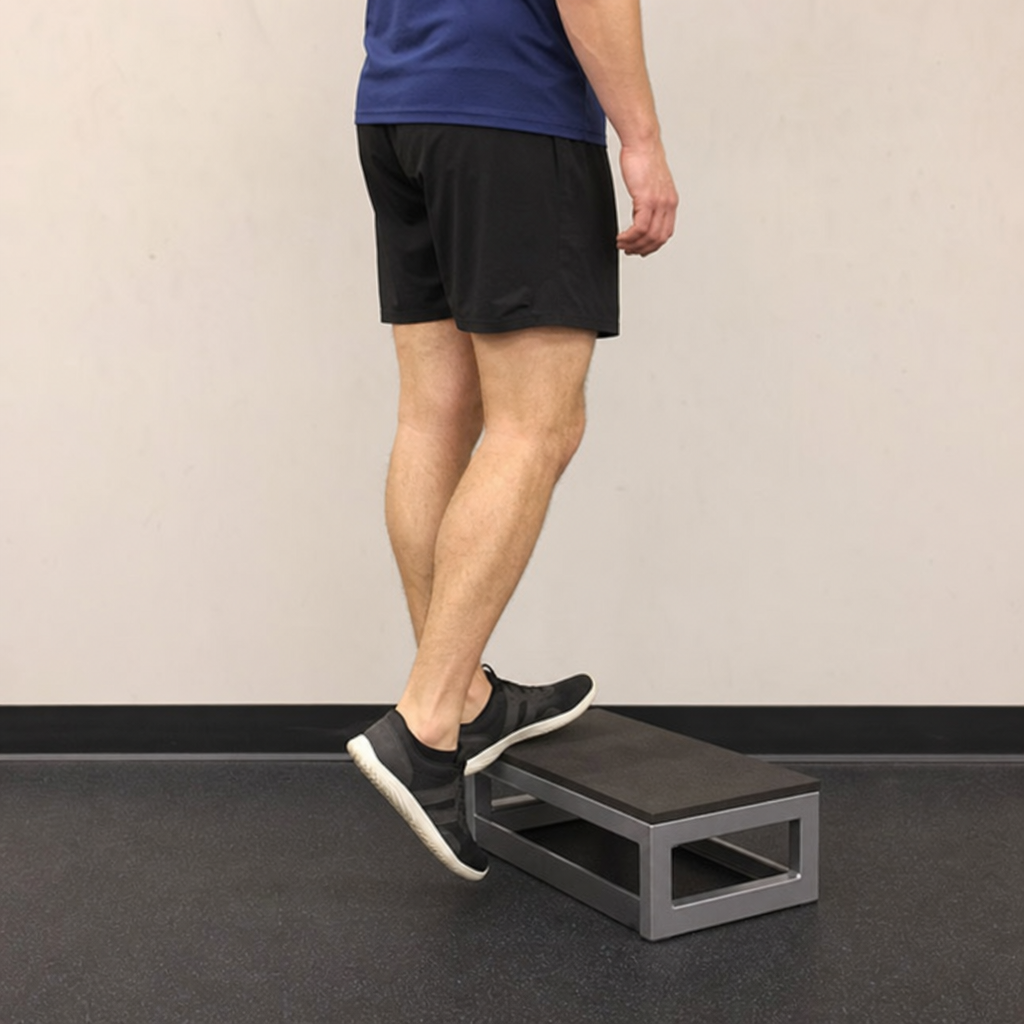
Toe Raises
A simpler starting point if eccentric heel drops feel too difficult initially.
- Stand with feet hip-width apart
- Slowly rise up onto your toes
- Hold at the top for 2-3 seconds
- Lower slowly back down
Start with both legs. Progress to single-leg as strength builds. Aim for 3 sets of 12.
Heel Raises (Seated)
This targets the soleus muscle, which is key for push-off strength.
- Sit on a chair with feet flat on the floor
- Place a weight across your knees (a backpack with books works)
- Raise your heels off the floor as high as you can
- Lower slowly over 3 seconds
3 sets of 15. Increase the weight gradually over weeks.
Resistance Band Exercises
Bands are brilliant for achilles tendon exercises because they provide variable resistance.
Ankle dorsiflexion:
- Sit with your leg straight, band looped around the ball of your foot
- Anchor the band to something solid in front of you
- Pull your foot back toward your shin against the band’s resistance
- Slowly release forward
Ankle plantarflexion:
- Same setup, but anchor the band behind you
- Point your toes away from you against the resistance
- Slowly return
3 sets of 15 each direction. These improve tendon tolerance across its full range of movement.
Sample Weekly Workout Plan
Consistency matters more than intensity. Here’s a realistic plan:
| Day | Focus | Exercises |
|---|---|---|
| Monday | Strength | Eccentric heel drops (3×15), toe raises (3×12) |
| Tuesday | Stretch | All stretches (hold 30s, 3x each), towel stretch AM |
| Wednesday | Strength | Heel drops (3×15), seated heel raises (3×15) |
| Thursday | Stretch | All stretches + resistance band work |
| Friday | Strength | Heel drops (3×15), single-leg balance work |
| Saturday | Light stretch | Towel stretch + standing calf stretch only |
| Sunday | Rest | Complete rest or gentle walking |
Prefer a printable routine? Use an achilles tendonitis exercises pdf to track sets and reps.
Important: Some discomfort during exercises (3-4 out of 10) is acceptable. Pain that forces you to stop, or pain that’s worse the next morning, means you’ve done too much. Reduce the load or reps and try again.
Tips for Injury Prevention
Once your Achilles pain settles, these habits will stop it coming back.
Choose the Right Shoes
Your footwear makes a huge difference. Look for:
- A slight heel raise (8-12mm heel-to-toe drop) – this reduces strain on the Achilles
- Good arch support for your foot type
- Cushioning that isn’t too worn (replace running shoes every 500-800km)
- Avoid completely flat shoes (ballet pumps, Converse) for long periods
If you’re a runner, get a gait analysis done. Many running shops in Surrey offer this free.
Warm Up Properly
Cold tendons are vulnerable tendons. Before any exercise:
- 5 minutes of brisk walking or light jogging
- Dynamic calf raises (gentle, not full range)
- Ankle circles in both directions
- Only then move to your full activity
Increase Activity Gradually
The 10% rule is a useful guideline – don’t increase your weekly training volume by more than 10% at a time. This applies to running distance, gym weights, or even time on your feet at work.
Most Achilles injuries happen when people do too much, too soon, after a period of rest.
Maintain Calf Flexibility
Even when pain-free, keep stretching. Two minutes of calf stretches after any exercise takes almost no time and protects the tendon long-term. Make the standing calf stretch and bent-knee stretch part of your post-exercise routine permanently.
Strengthen Year-Round
Don’t stop the exercises once the pain goes. Reduce to a maintenance dose – eccentric heel drops twice a week, 2 sets of 10 – to keep the tendon robust.
Doing the exercises but not seeing progress? If six to eight weeks of consistent effort hasn’t shifted things — or you’re not sure you’re doing them right — that’s exactly when hands-on physiotherapy makes the difference. We’ll refine your technique, add manual therapy, and progress your programme safely.
When to See a Specialist
Most Achilles tendon pain improves with 6-12 weeks of consistent stretching and exercise. But some signs mean you should seek professional help:
Pain lasting more than 6-8 weeks
If you’ve been doing the exercises consistently for two months and there’s no improvement, something else may be going on. A specialist can assess whether you need imaging or a different approach.
A sudden pop or snap
This could indicate a partial or full tendon rupture. Stop activity immediately and seek urgent assessment – this may need surgical repair.
Swelling that won’t go down
Persistent swelling despite rest and ice suggests significant tissue damage. Get it checked.
You can’t walk normally
If pain is altering your gait (you’re limping or avoiding pushing off), you need help before compensatory injuries develop elsewhere.
Pain is getting worse, not better
Progressive worsening despite exercise means the tendon is being overloaded. A professional can modify your programme or investigate other causes.
How Westway Clinic Can Help
At The Westway Clinic in Redhill, Surrey, we see Achilles tendon problems every week. Our team provides:
- Thorough assessment — identifying exactly where and why your tendon is struggling
- Personalised exercise programmes — tailored to your specific stage of recovery, not generic sheets
- Hands-on treatment — soft tissue work, joint mobilisation, and taping where appropriate
- Gait and biomechanics analysis — checking if your movement patterns are contributing
- Progressive return to activity — structured plans to get you back to running, sport, or daily life
We work with everyone from club runners to people who just want to walk the dog without pain.
Ready to get your Achilles sorted? You don’t need to wait weeks to see if it settles. The sooner we assess you, the sooner you recover — and the less likely it is to come back.
Book your Achilles assessment at Westway Clinic, Redhill.
Q&A
Understanding Your Condition
Question: What’s the difference between Achilles tendonitis and tendinopathy, and does it change how I should rehab?
Short answer: Tendonitis is short-term inflammation that comes on quickly (often hot, swollen, and reactive to a sudden activity spike). Tendinopathy is longer-term structural change in the tendon that develops gradually and may not be inflamed. Both respond to stretching plus progressive loading. In a tendonitis flare, emphasize relative rest and ice for 48–72 hours and start with gentler loading; in tendinopathy, make eccentric loading (like heel drops) the core of rehab and progress steadily. In both cases, keep stretches slow (30+ seconds), avoid bouncing, and monitor next-day symptoms to guide progression.
Exercise Guidance
Question: How much pain is acceptable during exercises, and how do I know when to progress?
Short answer: Mild discomfort (about 3–4 out of 10) during exercises is acceptable; sharp pain is not. The key check is the next morning: if pain is clearly worse, reduce reps/load or regress the exercise. Progress from flat-ground eccentric heel drops to step-based drops only once the flat version is comfortable and not flaring symptoms the next day. Increase volume and range gradually (e.g., 3×15 twice daily), then add load, not both at once.
Question: When should I do stretches versus strengthening during the day?
Short answer: Do gentle mobility first thing (e.g., the towel stretch in bed) because the tendon is stiffest in the morning. Before strengthening, warm up with 5 minutes of light activity and easy calf raises or ankle circles; heat can help if you’re in the longer-term phase. Place strengthening sessions (eccentric heel drops, raises) once warmed up. Use longer holds and broader stretching after activity and in the evening. Aim to stretch 3–4 times daily (30+ seconds each hold) and perform strengthening most days, adjusting for next-day response.
Footwear and Daily Life
Question: What footwear and simple modifications help reduce Achilles strain during recovery?
Short answer: Choose shoes with a slight heel-to-toe drop (about 8–12 mm), adequate arch support for your foot type, and cushioning that isn’t worn out (replace running shoes every 500–800 km). Avoid very flat shoes for long periods. A temporary heel wedge can reduce tendon load during recovery, and a gait analysis can confirm if footwear or mechanics are contributing. Orthotics aren’t needed for everyone but may help if flat feet/overpronation are part of the problem—ask a clinician for individualized advice.
what our clients say
Frequently Asked Questions
-
>How long does it take for Achilles tendinopathy to heal?
Most people see significant improvement within 6-12 weeks of consistent exercise. Full recovery can take 3-6 months for long-standing cases. The key is not stopping too early – even when pain reduces, the tendon needs continued loading to fully remodel.
-
Can I still run with Achilles tendon pain?
It depends on severity. Mild pain (2-3 out of 10) that settles within 24 hours is usually safe to run through, as long as it’s not getting worse week-on-week. Pain above 4/10, or pain that worsens the next day, means you should reduce or stop running temporarily and focus on the rehab exercises.
-
Are achilles tendon exercises safe to do every day?
Stretching can be done daily – ideally 3-4 times a day during the acute phase. Strengthening exercises (eccentric heel drops) should be done daily according to the Alfredson protocol, but listen to your body. If morning pain increases significantly, take a rest day.
-
Should I use ice or heat on my Achilles?
In the first 48-72 hours of a flare-up, ice helps reduce pain (10-15 minutes, wrapped in a cloth). For longer-term tendinopathy, heat before exercise can help loosen the tendon, while ice after exercise can manage any reactive pain. Neither replaces exercise as the primary treatment.
-
Do I need orthotics for Achilles pain?
Some people benefit from orthotics, particularly if flat feet or overpronation are contributing factors. A heel wedge (temporary lift in your shoe) can reduce strain on the tendon during recovery. Ask your clinician whether orthotics would help your specific case – they’re not needed for everyone. -
When should I consider surgery?
Surgery is rare for Achilles tendinopathy – less than 10% of people need it. It’s typically only considered after 6+ months of consistent rehab with no improvement, or for acute ruptures. The vast majority of cases resolve with exercise-based treatment.
Common searches like “exercises Achilles” and guides on achilles tendon stretches or achilles tendinopathy exercises refer to the same progressive programme described above.
Key Takeaways
- Achilles tendon pain responds best to a combination of stretching and progressive strengthening
- Eccentric heel drops are the most evidence-backed exercise – start with 3×15, twice daily
- Stretch your calves 3-4 times daily, holding each stretch for 30+ seconds
- Allow 6-12 weeks of consistent work before expecting full recovery
- See a specialist if pain persists beyond 8 weeks, worsens, or if you felt a sudden pop
- Prevention is about gradual progression, good shoes, and maintaining flexibility year-round
Clinically reviewed by The Westway Clinic, Redhill, Surrey. Last updated: July 2026.
Disclaimer: This information is for educational purposes and does not replace individual clinical assessment. If you are experiencing severe or worsening symptoms, please seek professional assessment.