
Understanding Lower Back Pain
Lower back pain is the single most common reason people visit our physiotherapy clinic in Redhill. It affects roughly 80% of adults at some point in their lives — whether it’s a sudden sharp twinge when bending, a persistent dull ache after sitting, or stiffness that makes the first few steps out of bed feel like hard work.
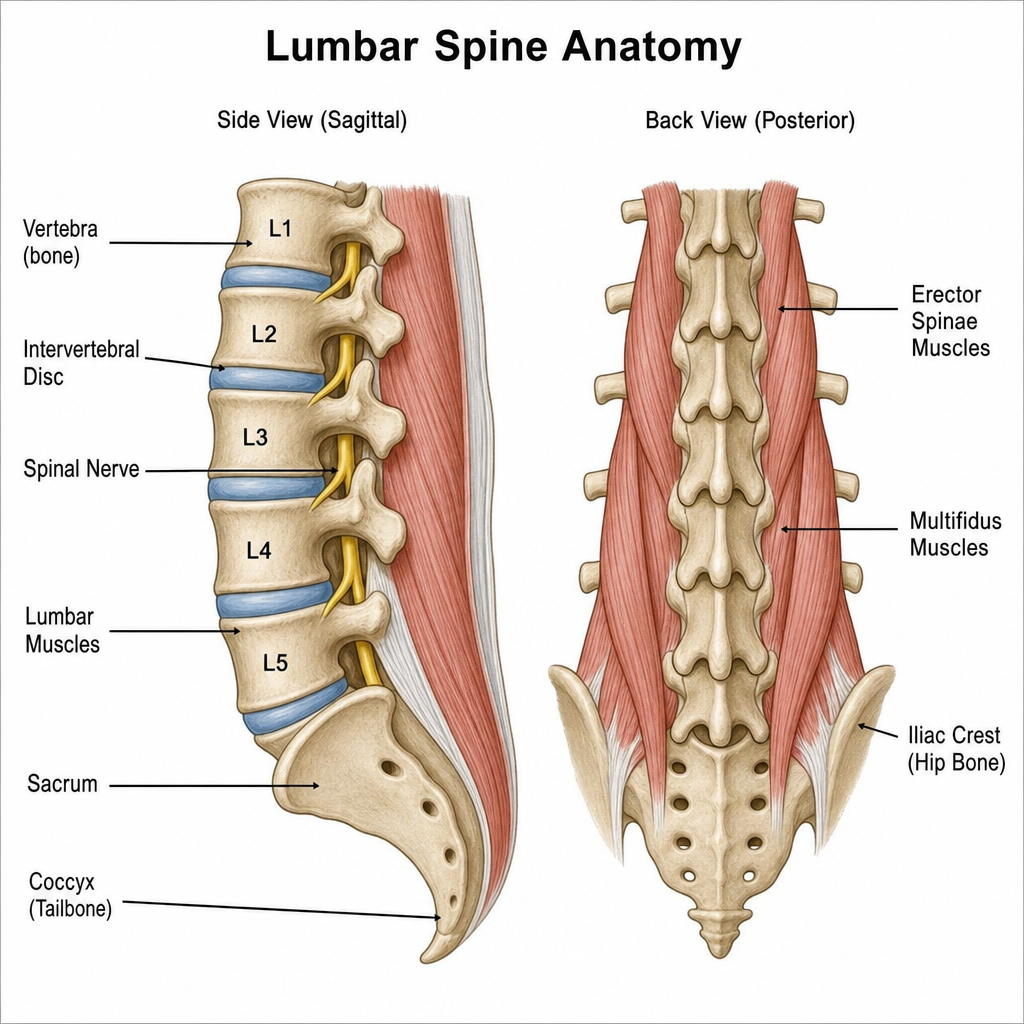
Your lower back (lumbar spine) bears the majority of your body weight and handles enormous forces during everyday movements — bending, lifting, twisting, and even simply sitting. As a result, it relies on a system of five vertebrae, shock-absorbing discs, strong ligaments, and layers of muscle to stay stable and mobile. When any of these structures are strained, compressed, or irritated, pain follows.
The good news? Most lower back pain improves within 4–6 weeks with the right approach. In particular, exercises for lower back pain are one of the most effective treatments — more effective than rest, and often more effective than medication alone. This page covers the common causes, the best exercises for lower back pain relief, core exercises, lower back pain stretches, physiotherapy for back pain options, and when to seek professional help.
Common Causes of Lower Back Pain
Understanding what’s causing your back pain is essential for effective back pain treatment. The most common causes include:
Muscle or ligament strain (most common): Overstretching, awkward lifting, sudden movements, or simply overdoing it can strain the muscles and ligaments of the lower back. Pain is usually one-sided, aches with movement, and eases with rest.
Disc problems: The discs between vertebrae can bulge, herniate, or degenerate. A herniated disc may press on a nerve root, causing pain that radiates into the buttock or leg (sciatica). Disc-related pain often worsens with sitting and bending forward.
Facet joint irritation: The small joints at the back of each vertebra can become stiff or inflamed. This typically causes localised aching that’s worse with extension (arching backward) and easing with flexion (bending forward).
Spinal stenosis: Narrowing of the spinal canal — usually age-related — reduces space for the nerves. Causes leg pain and heaviness that worsens with walking and eases with sitting or leaning forward.
Poor posture and deconditioning: Prolonged sitting, weak core muscles, and sedentary lifestyles are the most common contributors to persistent lower back pain. The muscles that should support the spine become weak, shifting load onto passive structures.
Other contributing factors:
- Excess body weight — increases compressive forces through the lumbar spine
- Stress and tension — increases muscle guarding and pain sensitivity
- Previous back injuries that weren’t fully rehabilitated
- Repetitive bending, lifting, or twisting at work
- Smoking — reduces blood flow to spinal discs, accelerating degeneration
When to Seek Physiotherapy
Most lower back pain improves with self-care and exercise. However, seek physio and back pain assessment if:
- Pain has lasted more than 4–6 weeks without improvement
- Pain is radiating into your leg (below the knee)
- You’re avoiding normal activities because of pain
- Morning stiffness lasts more than 30 minutes daily
- The pain keeps coming back
A physiotherapist can identify the specific cause and provide targeted lower back physiotherapy — accelerating recovery and reducing the chance of recurrence.
Exercises for Lower Back Pain
Exercise is the most evidence-supported treatment for lower back pain. It’s more effective than bed rest, and for many people more effective than medication alone. The right exercises reduce pain, improve function, and prevent recurrence.
Benefits of Exercise for Lower Back Pain
- Strengthens supporting muscles — reducing load on discs, joints, and ligaments
- Improves flexibility — reducing stiffness and improving range of motion
- Promotes blood flow — accelerating healing and reducing inflammation
- Reduces pain sensitivity — regular movement “teaches” the nervous system that movement is safe
- Prevents recurrence — people who maintain an exercise programme after recovery have significantly lower relapse rates
Best Exercises for Lower Back Pain
These lower back pain exercises form the foundation of most lower back pain rehabilitation programmes:
Knee-to-chest stretch:
- Lie on your back with both knees bent, feet flat
- Bring one knee up toward your chest
- Hold behind the thigh with both hands
- Pull gently until you feel a comfortable stretch in your lower back
- Hold for 20–30 seconds, then switch sides
- Repeat with both knees together
Cat-cow stretch:
- On all fours, hands under shoulders, knees under hips
- Slowly arch your back, letting your belly drop toward the floor (cow)
- Then round your back, tucking your chin and pelvis (cat)
- Move slowly between positions — 10 repetitions
- Focus on moving through a comfortable range
Pelvic tilts:
- Lie on your back, knees bent, feet flat
- Gently flatten your lower back against the floor by tilting your pelvis
- Hold for 5 seconds, then release
- Repeat 10–15 times
This teaches you to control lumbar spine position — fundamental for back pain management.
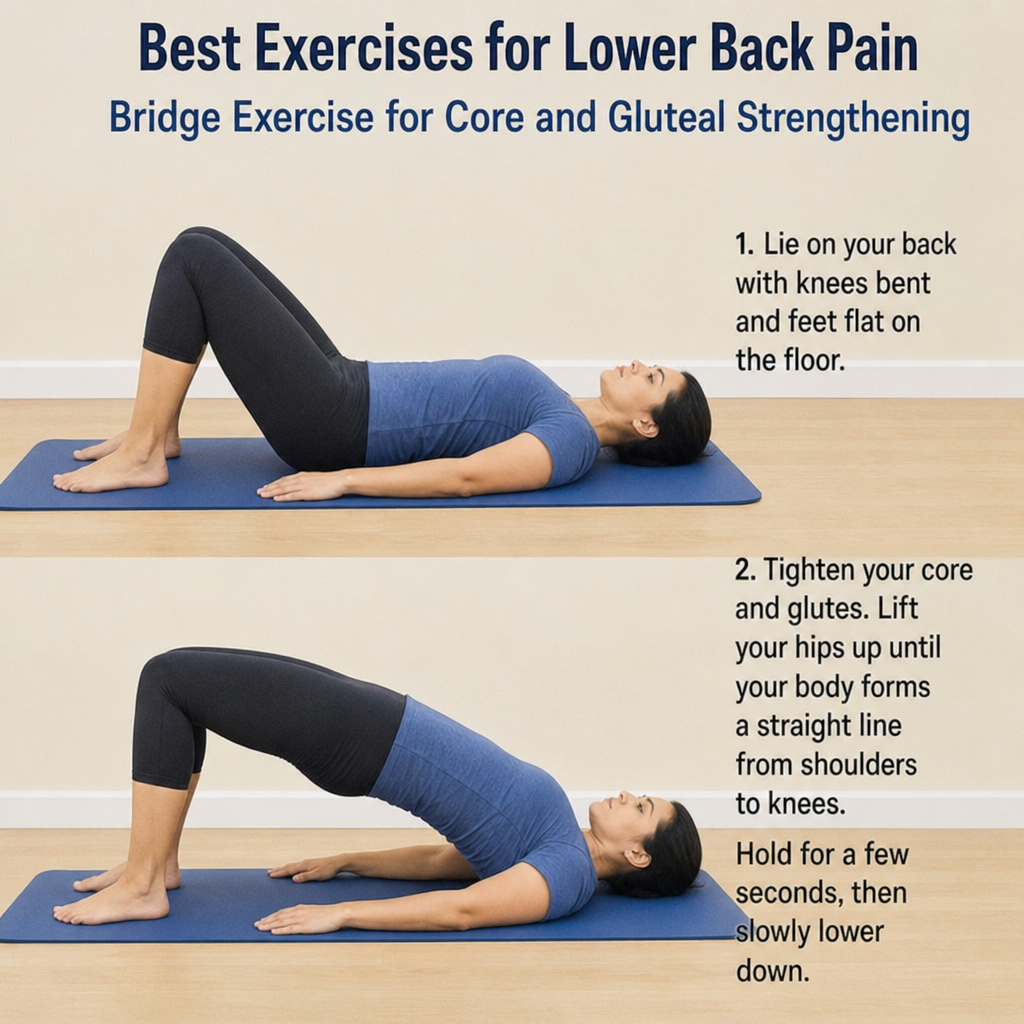
Bridges:
- Lie on your back, knees bent, feet flat and hip-width apart
- Push through your heels to lift your hips off the floor
- Your body should form a straight line from shoulders to knees
- Hold for 5 seconds at the top
- Lower slowly — 3 sets of 10
Core Exercises for Lower Back Pain
A strong core is your lower back’s best protection. These muscles act like a natural corset, stabilising the spine during movement and reducing strain on passive structures.
Dead bugs:
- Lie on your back, arms pointing to the ceiling, knees bent at 90 degrees
- Slowly lower your right arm behind your head while extending your left leg straight
- Keep your lower back pressed against the floor throughout
- Return to start, switch sides — 10 repetitions each
Bird-dog:
- On all fours, maintain a neutral spine
- Slowly extend your right arm forward and left leg back simultaneously
- Hold for 5 seconds, keeping your back level (don’t let your hips rotate)
- Return to start, switch sides — 10 each side
Plank (modified or full):
- Support your weight on forearms and toes (or knees for modified)
- Keep your body in a straight line — don’t let your hips sag or pike up
- Hold for 20–30 seconds, building toward 60 seconds
- 3 sets, with rest between
Side plank:
- Lie on your side, propped on your forearm
- Lift your hips so your body forms a straight line
- Hold for 15–20 seconds each side
- Progress to 30–45 seconds as strength builds
Lower Back Pain Stretches
Stretching releases tight muscles that pull on the spine and limit movement. These stretches target the most common areas of tightness in people with lower back pain.
Child’s pose:
- Kneel on the floor, sit back on your heels
- Walk your hands forward, lowering your chest toward the floor
- Let your forehead rest on the ground
- Hold for 30–60 seconds, breathing deeply
Piriformis stretch (figure-four):
- Lie on your back with both knees bent
- Cross one ankle over the opposite knee
- Pull the bottom thigh toward your chest
- Hold for 30 seconds each side
Hip flexor stretch (kneeling lunge):
- Kneel on one knee, other foot in front with knee at 90 degrees
- Shift your weight forward until you feel a stretch at the front of your back hip
- Keep your torso upright — don’t lean forward
- Hold for 30 seconds each side
Tight hip flexors are a major contributor to lower back pain — especially in people who sit for long periods.
Back Stretches for Lower Back Pain
Seated forward bend:
- Sit with legs extended straight
- Hinge forward at the hips, reaching toward your toes
- Keep your back as straight as possible — don’t round aggressively
- Hold for 20–30 seconds
Lying spinal twist:
- Lie on your back, arms out to the sides
- Bend both knees and let them drop to one side
- Keep both shoulders on the floor
- Hold for 20–30 seconds each side
Standing back extension:
- Stand with hands on your lower back
- Gently lean backward, supporting with your hands
- Hold for 5 seconds — repeat 5 times
- Particularly helpful if your pain is worse with sitting/flexion
Stretch daily — morning and evening. Hold each stretch for 20–30 seconds minimum, no bouncing. Starting with gentle back stretches for lower back pain can make strengthening work more comfortable.
Doing the exercises but not seeing progress? If two or three weeks of consistent effort hasn’t shifted things — or you’re not sure you’re doing them right — that’s exactly when hands-on physiotherapy makes the difference. We’ll refine your technique, add manual therapy, and progress your programme safely.
How to Perform Exercises Safely
- Warm up first — 5 minutes of walking or gentle movement before stretching or strengthening
- Start gently — particularly if you’re in a flare-up. Begin with stretches before progressing to strengthening
- Mild discomfort is okay — sharp pain is not. If an exercise causes shooting pain, stop and try a gentler alternative
- Check the next morning — if you’re significantly worse, you did too much. Scale back
- Progress gradually — increase reps or hold time before adding resistance
- Consistency beats intensity — 10 minutes daily is better than one long session weekly
Physiotherapy for Back Pain
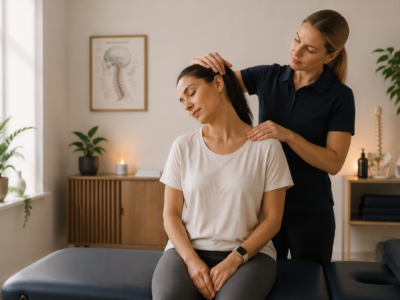
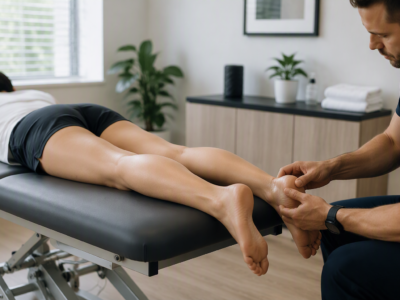
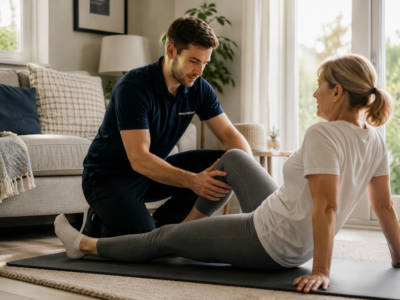
When self-management isn’t enough, lower back physiotherapy provides targeted treatment that addresses the specific cause of your pain. For many people, lower back pain and physiotherapy are most effective when combined with a tailored home plan, blending hands-on care with structured exercises for lower back pain.
Role of Physiotherapy in Lower Back Pain Treatment
Physiotherapy is the most effective professional treatment for lower back pain. At Westway Clinic, back ache physiotherapy includes:
- Thorough assessment — identifying which structures are causing pain and why
- Manual therapy — joint mobilisation, soft tissue release, and manipulation where appropriate
- Personalised exercise programme — targeted to your specific diagnosis and stage of recovery
- Education — understanding your pain, what’s safe, and how to self-manage
- Movement retraining — correcting patterns that contribute to ongoing pain
- Progressive rehabilitation — structured return to full activity, work, and sport
How Physio Helps with Back Pain
Physio and back pain treatment works because it addresses the root cause — not just symptoms:
- Identifies whether pain is from discs, joints, muscles, or nerves
- Reduces pain through hands-on treatment and targeted exercise
- Builds the strength and control that prevents recurrence
- Educates you on safe movement so you can self-manage long-term
- Provides confidence to return to activities you’ve been avoiding
Most patients see significant improvement within 4–6 sessions of physio for lower back pain, combined with a consistent home exercise programme. Your clinician may also prescribe lower back physiotherapy exercises for pain relief and function tailored to your goals.
Exercises You Can Expect in Physiotherapy
A typical physiotherapy programme for lower back pain includes:
- Mobility exercises — pelvic tilts, cat-cow, knee rolls to restore comfortable movement
- Core stability — dead bugs, bird-dogs, planks progressed gradually
- Strengthening — bridges, squats, step-ups to build capacity
- Stretching — hip flexors, hamstrings, piriformis to reduce muscle tension
- Functional exercises — lifting technique, bending practice, return-to-sport drills
Your programme is progressed as pain reduces and strength builds — ensuring you’re always working at the right level.
Lifestyle Changes for Lower Back Pain Relief
Importance of Posture
Poor posture is one of the biggest contributors to persistent lower back pain. When you slump, the lumbar curve flattens, increasing pressure on discs and stretching ligaments.
Key posture principles:
- Sitting: Maintain a gentle lumbar curve (use a rolled towel or lumbar support). Feet flat, knees at hip height.
- Standing: Weight evenly distributed, slight bend in knees, ears over shoulders over hips.
- Sleeping: On your back with a pillow under knees, or on your side with a pillow between knees. Avoid stomach sleeping.
Ergonomic Workspaces
If you work at a desk, your setup directly affects your back:
- Chair: Adjustable height with lumbar support. Feet flat on the floor.
- Desk height: Elbows at 90 degrees when typing.
- Monitor: Top of screen at eye level, arm’s length away.
- Breaks: Stand and move every 30–45 minutes — even 30 seconds of standing resets your posture.
Tips for Daily Activities
- Lifting: Bend at the knees and hips, keep the load close to your body, don’t twist while lifting
- Driving: Adjust seat for lumbar support, keep knees slightly bent, take breaks on long journeys
- Housework: Use long-handled tools, kneel rather than bend for low tasks, avoid prolonged vacuuming in one direction
- Exercise: Stay active — walking, swimming, and cycling are excellent for back health. Aim for 30 minutes most days.
When to Seek Professional Help
Most lower back pain improves within 4–6 weeks. However, certain symptoms need urgent assessment.
Signs You Need Medical Attention
Seek immediate medical attention (A&E) if you experience:
- Loss of bladder or bowel control
- Numbness around your genitals or saddle area
- Progressive weakness in both legs
- Severe pain following a significant trauma (fall from height, car accident)
These are signs of cauda equina syndrome — a rare but serious condition requiring emergency treatment within 24–48 hours.
See your GP or physiotherapist promptly if:
- Pain has lasted more than 6 weeks with no improvement
- Pain radiates below the knee
- You have progressive leg weakness or foot drop
- Pain wakes you at night (not just when turning)
- You’re experiencing unexplained weight loss with back pain
Don’t push through worsening symptoms — early intervention leads to faster recovery.
Ready to get your back pain sorted? You don’t need to wait weeks to see if it settles. The sooner we assess you, the sooner you recover — and the less likely it is to come back.
Book your lower back pain assessment at Westway Clinic, Redhill.
Q&A
Getting Started Safely
Question: Should I rest in bed or keep moving with lower back pain?
Short answer: Keep moving. Bed rest makes lower back pain worse — it weakens muscles, stiffens joints, and increases pain sensitivity. In the first day or two you may need to reduce activity, but aim to keep walking and doing gentle movements (pelvic tilts, knee-to-chest stretches) as soon as possible. Research consistently shows that staying active leads to faster recovery than rest.
Question: Is it safe to exercise when my lower back is hurting?
Short answer: Yes — with the right exercises. Start with gentle stretches (knee-to-chest, cat-cow, child’s pose) and progress to strengthening once acute pain settles. Mild discomfort during exercise is acceptable; sharp or shooting pain means stop and try something gentler. The exercises on this page are designed to be safe during a flare-up, starting with the easiest options.
Choosing the Right Exercises
Question: How do I know if my back pain is muscular or a disc problem?
Short answer: Muscular pain is usually localised to the lower back, aches with movement, and eases with rest. Disc-related pain often worsens with sitting and bending forward, and may cause radiating leg pain, numbness, or tingling. If your pain stays in the back and doesn’t travel below the buttock, it’s more likely muscular. A physiotherapist can perform specific tests to differentiate between the two.
Progress and Recovery
Question: How long before back exercises start helping?
Short answer: Most people notice some improvement within 1–2 weeks of consistent daily exercise. Significant strength gains take 6–8 weeks. For chronic lower back pain, the benefits of exercise are maintained as long as you keep doing them — stopping often leads to gradual return of symptoms. Consistency matters more than intensity.
Question: Is walking good for lower back pain?
Short answer: Yes — walking is one of the best things you can do for lower back pain. It gently mobilises the spine, promotes blood flow, strengthens supporting muscles, and doesn’t overload the back. Start with whatever distance is comfortable (even 5–10 minutes) and gradually increase. Aim for 30 minutes most days as symptoms allow.
Question: How often should I do these lower back exercises, and how do I progress them?
Short answer: Aim for a little every day. Start with 5 minutes of gentle movement to warm up, then do mobility and stretches (knee-to-chest, cat-cow, pelvic tilts) daily. Hold stretches for 20–30 seconds (up to 60 seconds for child’s pose), and perform 10 slow reps for mobility drills. Add strengthening (bridges 3 x 10 with a 5-second hold, dead bugs and bird-dogs 10 each side, planks 20–30 seconds building toward 60 seconds) on days you tolerate it. Progress by increasing reps or hold time before adding resistance or harder variations. Check how you feel the next morning—if you’re significantly worse, reduce sets/reps and rebuild gradually. Consistency beats intensity.
Question: Which exercises should I focus on if bending forward or arching backward makes my pain worse?
Short answer: Match your exercises to your pain pattern. If sitting and bending forward worsen symptoms (often disc-related), extension-bias movements can help—try gentle standing back extensions and bridges, and keep the spine neutral during core work (bird-dog, dead bug, modified plank). If arching backward increases pain (often facet joint irritation), choose flexion-bias work—knee-to-chest, child’s pose, and cat-cow through a comfortable range. If walking brings on leg pain that eases when you lean forward (spinal stenosis), shorter walks with rest and flexion-friendly positions (sitting, gentle forward lean, knee-to-chest) are often more comfortable. Always move within a pain-tolerable range and stop sharp or shooting pain.
Question: How do I know if I’m doing too much or the wrong exercise?
Short answer: Mild, manageable discomfort during or shortly after exercise is okay—sharp, shooting, or worsening leg pain is not. Stop any exercise that causes radiating pain below the knee, numbness, or tingling, and switch to gentler options. Use the “next morning” check: if you wake significantly stiffer or sorer, scale back the volume or intensity. Seek prompt professional assessment if pain persists beyond 6 weeks, keeps returning, or limits normal activity. Get urgent medical help (A&E) for red flags like loss of bladder/bowel control, saddle numbness, rapidly worsening leg weakness, or severe pain after major trauma.
Question: What does a simple starter routine look like for a flare-up?
Short answer: Keep it short, gentle, and regular.
- Morning: 5-minute easy walk or warm-up, cat-cow x 10, pelvic tilts x 10–15, child’s pose 30–60 seconds.
- Midday: 5–10-minute walk; posture reset (sit tall with a gentle lumbar curve).
- Evening: Bridges 3 x 10 (5-second hold), dead bugs x 10 each side, bird-dog x 10 each side, modified plank 20–30 seconds x 3. Finish with hip flexor and piriformis stretches (30 seconds each side) and a lying spinal twist (20–30 seconds each side). Adjust reps or holds to stay in a comfortable range.
Lifestyle and Prevention
Question: Which lifestyle changes make the biggest difference for persistent lower back pain?
Short answer: Prioritise posture, regular movement, and targeted stretching. Maintain a gentle lumbar curve when sitting (use a small lumbar support), set your desk so elbows are at 90 degrees and the screen is at eye level, and stand/move every 30–45 minutes. Walk most days (build toward 30 minutes as symptoms allow). Stretch common tight spots—hip flexors, hamstrings, and piriformis—daily. Use good lifting technique (bend at hips and knees, keep the load close, avoid twisting). Managing contributors like prolonged sitting, deconditioning, excess weight, stress/tension, and smoking can further reduce strain on the lower back.
Frequently Asked Questions
-
How long does lower back pain take to go away?
Most episodes improve within 4–6 weeks with appropriate exercise and self-care. Muscle strains often settle within 2–3 weeks. Disc-related pain may take 6–12 weeks. If your pain hasn’t improved after 6 weeks of consistent exercise, seek professional assessment — lower back physiotherapy can identify what’s being missed.
-
What are the best exercises for lower back pain?
The most effective exercises combine mobility (cat-cow, pelvic tilts), core strengthening (dead bugs, bird-dogs, planks), and stretching (knee-to-chest, piriformis stretch, child’s pose). The best exercise is one you’ll do consistently — start with what feels manageable and progress gradually. Many people benefit from guided physio for back pain to refine technique and choose the best exercises for lower back pain.
-
Can physiotherapy help with chronic lower back pain?
Yes — physiotherapy is one of the most evidence-supported treatments for chronic lower back pain. It combines hands-on treatment, targeted exercises, education about pain, and graduated return to activity. It’s particularly effective when self-management alone hasn’t worked. Most patients see significant improvement within 4–6 sessions.
-
Should I use heat or ice for lower back pain?
For acute pain (first 48–72 hours): ice can help reduce inflammation — 15–20 minutes with a towel barrier. For chronic or muscular pain: heat is usually more effective — it relaxes tight muscles and improves blood flow. A hot water bottle, heat pad, or warm bath for 20–30 minutes before exercise often helps.
-
When should I worry about lower back pain?
Seek urgent assessment if you have loss of bladder/bowel control, saddle-area numbness, progressive leg weakness, or severe pain following trauma (cauda equina syndrome signs). See a professional if pain persists beyond 6 weeks, radiates below the knee, or is accompanied by unexplained weight loss or night pain.
Key Takeaways
- Most lower back pain resolves within 4–6 weeks with the right exercises — rest makes it worse
- Core exercises (dead bugs, bird-dogs, planks) are your best long-term protection
- Stretch tight hip flexors, hamstrings, and piriformis muscles daily
- Stay active — walking is one of the best treatments for lower back pain
- Fix your workstation: lumbar support, screen at eye level, breaks every 30–45 minutes
- Physiotherapy for back pain accelerates recovery when self-care isn’t enough
- Seek urgent help for bladder/bowel changes, saddle numbness, or progressive leg weakness (cauda equina)
Clinically reviewed by Jawad Ahmed, HCPC-registered Physiotherapist, Westway Clinic, Redhill, Surrey. Last updated: July 2025.
Disclaimer: This information is for educational purposes and does not replace individual clinical assessment. If you are experiencing severe or worsening symptoms, please seek professional assessment.
What our clients say